
The unexpected tranquility of a self-hosted news reader
Fifteen or so years ago, I built a robust collection of RSS feeds from various websites I liked to follow. But somehow along the way I stopped using RSS and got "hooked" into the algorithmic portals of various services like Reddit, Twitter, YouTube, Bluesky, etc.
With every scroll, a seemingly endless array of content spilled onto my screen and with it, an anxiety I hadn't known before: my every action seemed to slightly inform the machine of my interests. If I sat too long on something, I'd invariably start receiving more of that something. If I tapped on a post, that gave the machine a strong indication of my tastes and persuasions.
This awareness of being constantly harvested affected my behavior. Do I tap on that video that I mildly care about and risk upsetting my carefully curated algorithm? Do I want to start seeing more content on this or that? How could this behavior be used against me if, say, fascists control the levers of power? The web went from being a place of exploration to a place that needed careful treading.
It shouldn't be this way.
I then remembered my old friend, the RSS feed reader. Previously I had used Feedly connected to my Google account, which offered (at the time) a lovely free service for curating RSS feeds. In 2026 however, it seems as if Feedly's focus has shifted to other industries and their news reader has taken a backseat. It certainly costs more now too at a minimum $6 a month (billed annually).
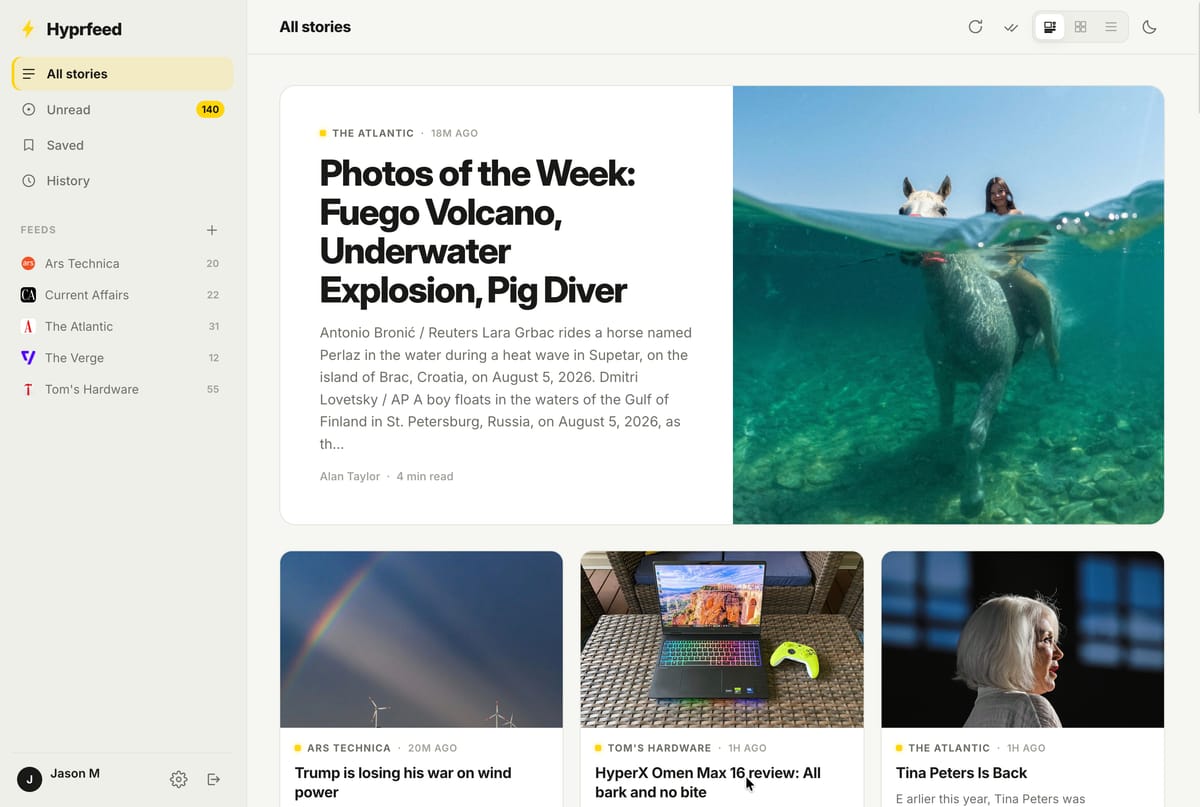
Like most people, I am saturated with SaaS subscriptions and am actively looking to cut them, not add more. Exploring the landscape of Feedly-like self-hosted apps revealed a space largely barren. There are some mature projects but nothing like the elegance and magazine-like experience of Feedly. So I took to Claude Code and had Fable create one for me. I call it Hyprfeed and it's quickly transforming how I consume the news.
One of the most curious and unexpected parts of this switch has been the mental relief of not having to combat the algorithmic slot machine with every interaction. My reader runs on my server and doesn't learn from my behavior at all. It does exactly what I designed it to do: show me the news when it's published. It allows me to save articles for later, skip articles I don't care about and never leak any of my behavior to third parties.
This is the calm, the peace of mind, that's been missing for years. This is how the web used to feel, and it's how the web can still be with the right application of intention and care.
You can of course install and run Hyprfeed on your own Docker instance. It's published both on my Github page and on Dockerhub as a ready made image.